- Home
- About us
-
-
Who We are
-
Governance
-
Certification
-
-
-
- Our Programme
-
-
Public Course
-
Customised Courses?
-
-
-
-
-
-
- Our Facilities
- Contact us


- Home
- About us
-
-
Who We are
-
Governance
-
Certification
-
-
-
- Our Programme
-
-
Public Course
-
Customised Courses?
-
-
-
-
-
-
- Our Facilities
- Contact us
History of Outward Bound?
In Malaysia, Outward Bound grew out of the need to train leaders for the private and public sectors, and to mould good citizenship.
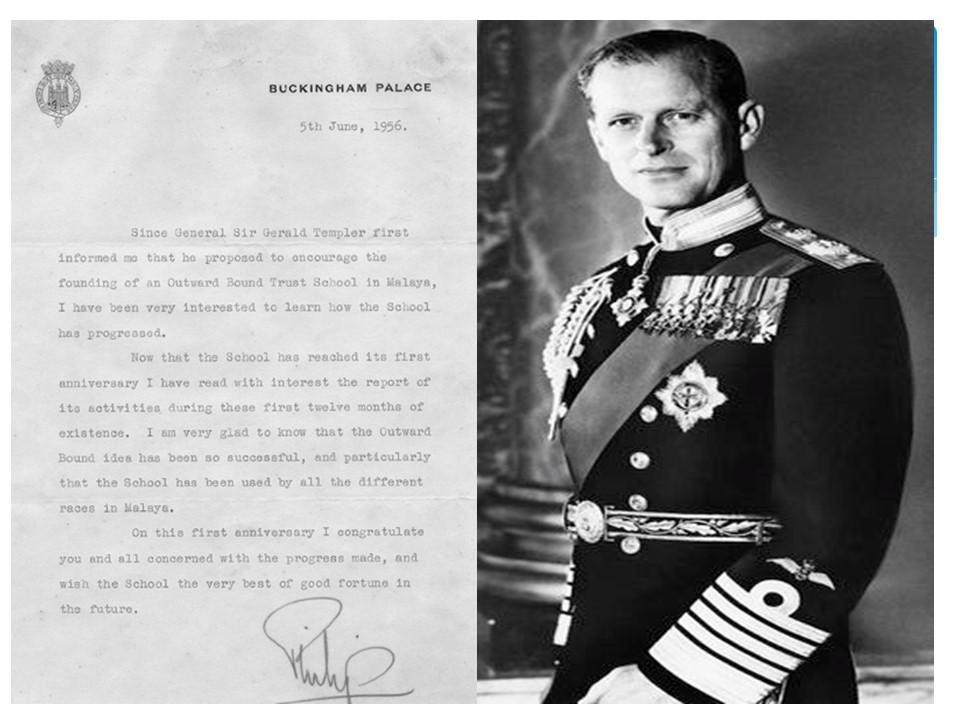
In 1952, Tun Sir Gerald Templer, then the British High Commissioner of Malaya, saw the need for leaders and captains of industries to be prepared to run the country in anticipation of impending independence. The Federation Military College (Royal Military College – RMC) and the Outward Bound School Lumut were his twin projects to provide for this need. The story of the Outward Bound School of Malaya began on 28 June 1952. On that date, three men visited the Perak coast near Lumut to look for a possible site for a “sea school”. They were M. Sheppard, M.C.S., then British Adviser, Negeri Sembilan, who arranged the meeting; G.S. Walker, M.C.S., the District Officer of Lumut; and E.L. Marsh, a member of the staff of Barlow & Co. in Kuala Lumpur. Marsh was a life member of the Outward Bound Trust in England and was familiar with its organisation, which was why Sheppard invited him to come to Lumut with him on 28 June.
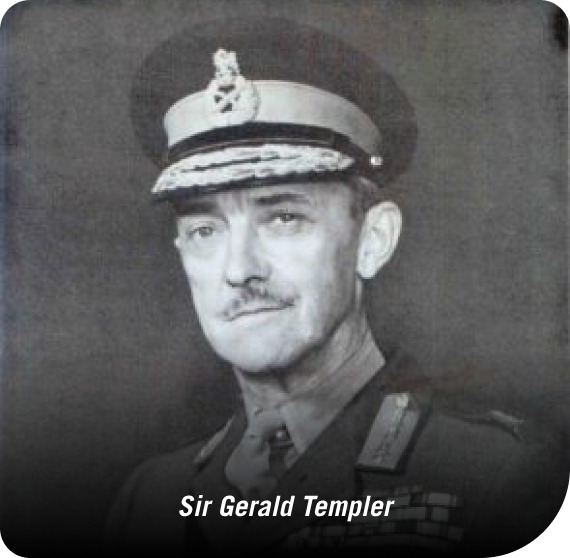
Sheppard, as a British adviser, had easy access to the High Commissioner then. He mentioned the idea of setting up such a school for leadership training to General Sir Gerald Templer and was promised enthusiastic support. Three possible sites were examined: one at Kuala Sepit, one at Telok Muroh and a third at Telok Haji Salim, all in Perak. As the preliminary memorandum of the scheme was being drafted, Sheppard wrote to the Director of Education, L.D. Whitfield, suggesting that one or more student teachers from the government teacher training centre at Kirby be sent to an Outward Bound course. Some of you may be old enough to remember that at one time, we sent a great number of student teachers to Kirby to be trained as teachers. Whitfield agreed to the suggestion and put forward the name of a graduate of Kirby who had specialised in physical training to attend an Outward Bound course at Aberdovey. It was now January 1953 and a draft memorandum with some preliminary estimates of costs was prepared and exchanged between the four planners. The first draft memorandum was headed “The Templer Sea School”. The object, as planned, was to offer to Malayan industries, education establishments, youth organisations, trade unions, government and public authorities, parents and others, opportunities to provide special character training for their young men by sending them for a course at the sea school. The memorandum set out the principles on which the school would be founded, accepting 50 young men between the ages of 17 and 22 for each course. It was agreed that the government be asked to make an interest free loan of $250,000 to launch the project. It was also proposed that a trust be set up in Malaya to administer the scheme.
Mr. RB Carey
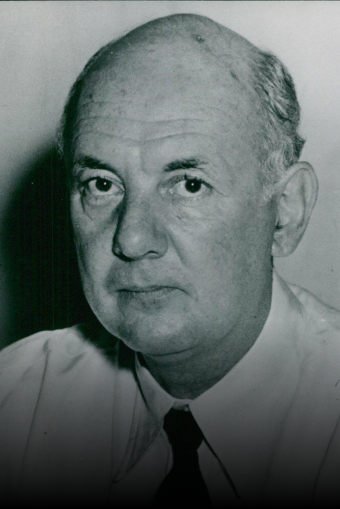
The final draft was agreed to at a meeting of the four planners at the Seremban Residency on Sunday, 25 January 1953 and was sent to the High Commissioner General Sir Gerald Templer on 7 March 1953. A few days earlier, the financial secretary, Himsworth, whose advice had been sought by the high commissioner, stated in a two-page memorandum that funds could not be made available for at least another 12 months. Sir Gerald Templer was not discouraged and he was not prepared to wait 12 months for the funds. He agreed to invite leaders of Malayan banking and business industries to meet him and consider giving their practical support. Sheppard sent him a list of 34 such potential benefactors and Templer arranged to hold an “at home” (or house party) in London in May 1953 to which these and a number of others were invited. Sheppard also asked Peterson, the Director of Information Services then, if he could provide a short film about Malayan youths, to be shown at the “at home”. It was completed and sent to London in time for the house party. Marsh was among those present at Templer’s lunch party in London. The guests were inspired by Templer’s charisma and typically blunt style of oratory, and gave an assurance of sufficient funds to make it possible to proceed with the project. Sheppard took two months’ leave in the summer of 1953 and invited Raja Sir Uda, the Malayan High Commissioner in London, to come and visit the Outward Bound Sea School at Aberdovey on 5 August. He was welcomed by Capt. J. Fuller, the warden. Raja Sir Uda was most impressed by the activities of the school. Two weeks later, when Sheppard was staying at his home in Ireland, he received a letter from Sir Gerald Templer in which he mentioned that he had set up the School, and had appointed Mr R. Carey, the member for works, as the Chairman.
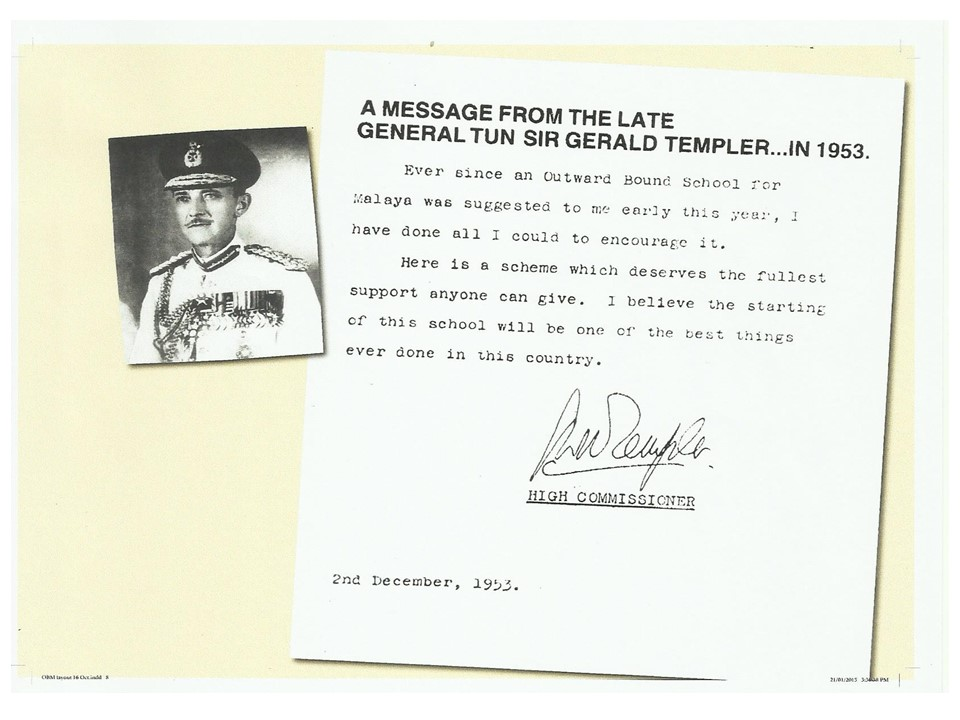
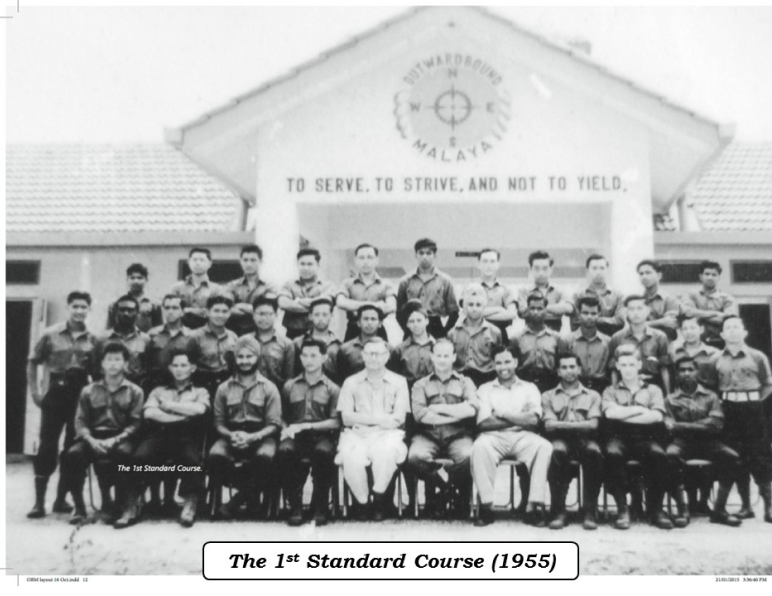
He added, “Fuller is flying out here on 20th September to give advice on where the school should be. I think myself, if all goes well, the first course will take place on 1st May, next year.” Upon Sheppard’s return to Negeri Sembilan, the group of four planners was dissolved and a trust committee was set up in February 1954. With it, a new chapter in the history of the Outward Bound School of Malaya opened. Capt. Fuller, who was warden at the first Outward Bound School in Aberdovey, Scotland, was appointed the pioneering warden for the School. The School stands as the second oldest Outward Bound Sea School in the world. Interestingly, our founding Prime Minister, Tunku Abdul Rahman, upon his return from London in 1954 after his first mission for negotiating for independence of the nation, had Fuller as a fellow passenger. Fuller so impressed the Tunku on the school vision that Tunku offered his wholehearted support and promised to send his son on the first course. Tunku kept his promise, and his son was among those who attended the first course on 30 April 1955.
The first woman to attend an OBM course was in 1971. All courses are now mixed courses. The School has the capacity to take up to 2,800 participants a year. To date, more than 140,000 participants have successfully gone through its various courses, holding true to its motto, “To Serve, To Strive and Not To Yield”.